Making an Informed Decision Before Buying Your First Factory
Buying your first factory is a significant investment, especially for business owners purchasing industrial property for the first time. Unlike buying a residential property, choosing the right factory involves more than comparing prices, built-up areas and locations.
The wrong decision could affect your business operations, cash flow and future expansion plans.
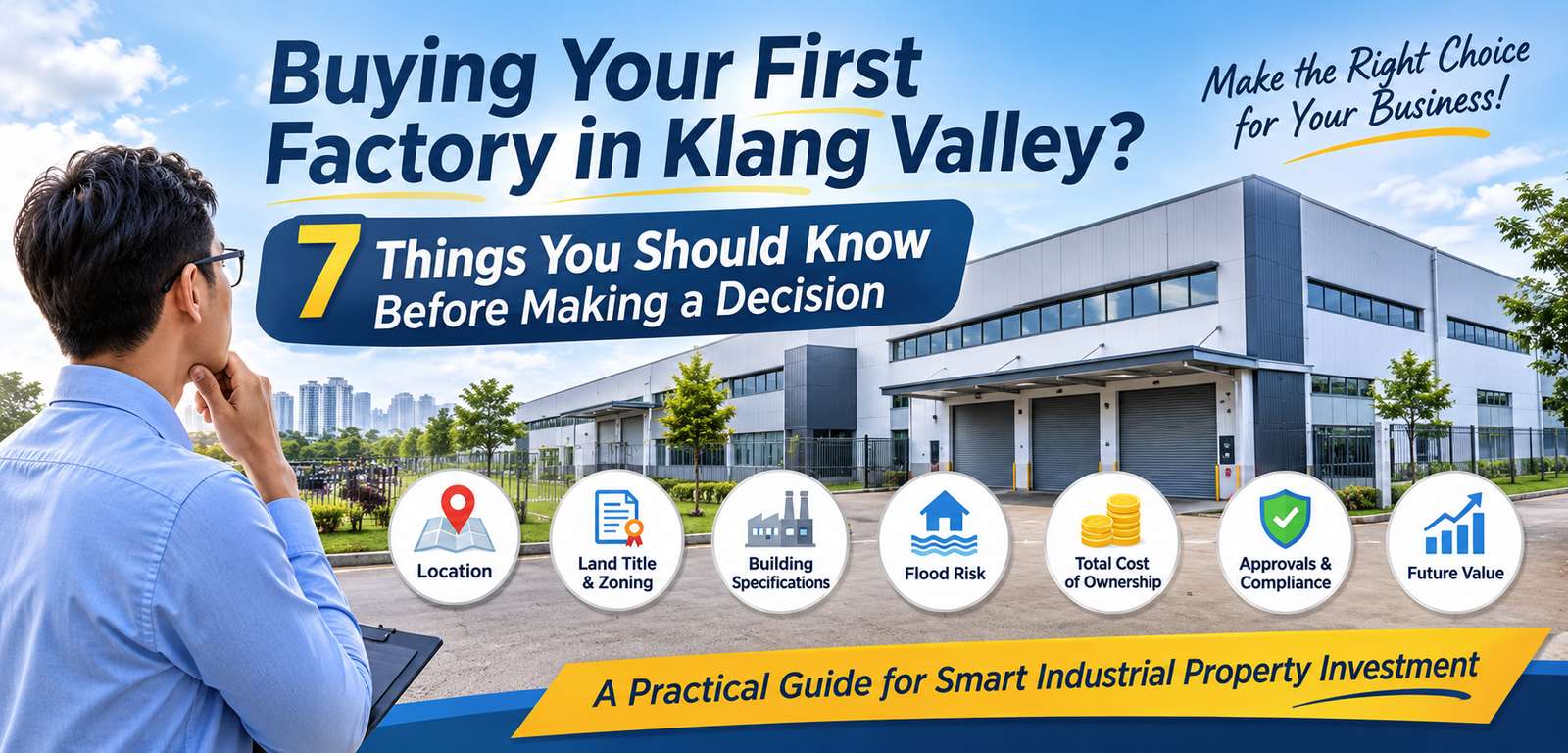
Whether you are looking for a manufacturing facility, warehouse or industrial property in Kuala Lumpur and Selangor, here are 7 essential considerations to help you make a more informed purchase.
1. Location: Look Beyond the Address
Location plays a crucial role in determining a factory’s operational efficiency and long-term value.
Before choosing a location, consider:
- Highway accessibility: Convenient access to major highways for transportation and logistics.
- Proximity to suppliers and customers: Reduce transportation time and delivery costs.
- Labour availability: Ensure sufficient manpower within the surrounding area.
- Industrial ecosystem: Consider whether the area has established supporting industries and logistics facilities.
- Future infrastructure: Look at upcoming road improvements and infrastructure developments.
Industrial locations worth exploring in Klang Valley include Shah Alam, Klang, Subang, Puchong, Balakong, Kajang, Rawang and Sungai Buloh.
Remember, a cheaper factory in a less accessible location may result in higher operating costs over time.
2. Understand the Land Title and Permitted Use
This is one of the most important checks before purchasing industrial property.
Do not assume that every property marketed as a factory is suitable for your intended business.
Verify:
- Land title: Freehold or leasehold?
- Land category: Is it categorised for industrial use?
- Express conditions: Are the permitted activities compatible with your business?
- Zoning: Does the local authority permit your intended operations?
- Restrictions in interest: Are there restrictions on ownership, transfer or dealings?
- Foreign ownership: Are there additional restrictions if the purchaser is a foreign individual or foreign-owned company?
For leasehold properties, also consider the remaining lease period and the implications for financing and future resale.
Always engage a conveyancing lawyer to conduct the necessary title and legal searches before committing.
3. Check the Building Specifications and Operational Requirements
A factory may look impressive during a viewing, but its specifications must match your actual business requirements.
Pay attention to:
- Land area and built-up area: Ensure sufficient space for production, storage and future expansion.
- Floor loading capacity: Can the floor support heavy machinery and storage equipment?
- Ceiling height: Is there sufficient clearance for production lines and vertical storage?
- Loading bay: Is there a dedicated loading and unloading area?
- Electrical capacity: Is the existing power supply sufficient for your machinery?
- Vehicle accessibility: Can container trucks and heavy goods vehicles enter and manoeuvre easily?
- Parking: Is there sufficient parking for employees and visitors?
Also check the availability of water supply, drainage, telecommunications and other essential utilities.
A factory that meets your current requirements but cannot accommodate future expansion may become a costly limitation.
4. Flood Risk: Never Underestimate Water Damage
Flooding is a serious consideration when buying industrial property in parts of Kuala Lumpur and Selangor.
A flood event can cause significant damage to machinery, inventory, electrical systems and building infrastructure. More importantly, it can interrupt business operations for weeks or even months.
Before purchasing:
- Investigate the property’s historical flood records.
- Speak to neighbouring factory owners about past incidents.
- Inspect nearby rivers, drains and surrounding roads.
- Check the factory’s floor level against the surrounding ground and road levels.
- Look for signs of previous water damage.
- Assess the effectiveness of the drainage system.
Where possible, visit the property during or shortly after heavy rainfall.
Do not rely solely on the seller’s assurance that the factory has never experienced flooding. Independent verification is essential.
5. Assess the True Cost of Ownership
The purchase price is only one part of your total investment.
First-time buyers should budget for:
- Stamp duty on the Memorandum of Transfer (MOT).
- Legal fees and property valuation fees.
- Loan agreement stamp duty and related financing costs.
- Renovation and refurbishment.
- Machinery installation and electrical upgrades.
- Fire safety and regulatory compliance improvements.
- Assessment rates, quit rent and applicable service or maintenance charges.
- Insurance and ongoing building maintenance.
If the factory requires substantial upgrading, obtain quotations before finalising your purchase decision.
Also check whether the property can qualify for bank financing and whether the valuation supports the agreed purchase price.
6. Check Approvals, Safety and Compliance
A factory’s existing structure and approvals should be properly verified.
Depending on the property and intended business activities, check:
- Approved building plans and Certificate of Completion and Compliance (CCC), where applicable.
- Local authority planning and building approvals.
- Permitted industrial activities.
- Fire safety requirements and relevant Bomba approvals.
- Environmental requirements and scheduled waste management.
- Machinery installation and workplace safety requirements.
- Relevant operational licences and permits.
A property being sold as an industrial building does not automatically mean that all manufacturing activities are permitted.
Verify the requirements with the relevant authorities before completing the purchase.
7. Consider Future Value and Green Factory Features
A good industrial property should serve your business today while retaining its attractiveness in the future.
Look beyond immediate operational needs and consider:
Investment and resale potential
- Established industrial location with good accessibility.
- Strong demand from industrial owner-occupiers and businesses.
- Suitable land and building configuration.
- Potential for future expansion or redevelopment, subject to approvals.
- Reasonable land-to-building ratio.
Green and sustainable features
- Rooftop solar panel potential.
- Energy-efficient lighting and electrical systems.
- Natural ventilation and daylight.
- Rainwater harvesting systems.
- Water-saving facilities.
- Proper waste management and recycling provisions.
- Smart energy monitoring systems.
- Recognised green building certifications, where applicable.
As businesses become more conscious of energy consumption and sustainability, these features may contribute to lower operating costs and greater long-term appeal.
Your First Factory Buying Checklist
Before putting down a booking fee or signing the Sale and Purchase Agreement buying your first factory, ask yourself these seven questions:
- Is the location suitable for my business operations and logistics?
- Is the land title and permitted use compatible with my intended activities?
- Can the building support my machinery, equipment and loading requirements?
- Have I independently checked the property’s flood history?
- Are the building approvals and regulatory requirements in order?
- Have I calculated the total acquisition and upgrading costs?
- Does the property have good long-term usability and resale potential?
Final Thoughts
Buying your first factory is not simply about securing an industrial property at the right price. It is about making a sound business and property investment decision.
A well-located factory with the right specifications, proper approvals, manageable flood exposure and good infrastructure can become a valuable long-term business asset.
Don’t just buy a factory because it looks suitable today. Buy one that can support your business, protect your investment and accommodate your growth tomorrow.