Today’s Real Estate Market Is Getting Smarter
For decades, the dominant narrative in real estate has been a simple, comfortable mantra: property prices only go up.
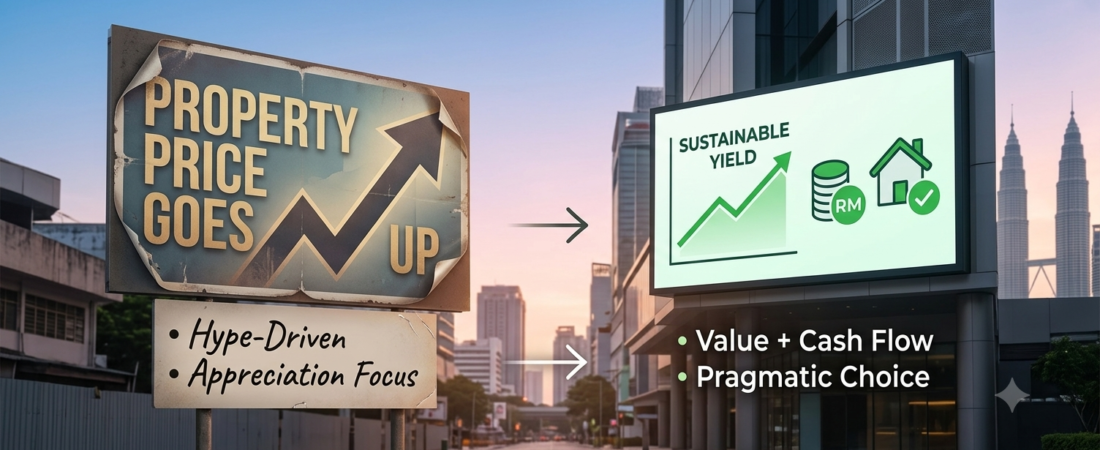
However, anyone closely observing the current market cycle knows that this isn’t how the game actually works. We are transitioning out of a phase driven by speculative hype and moving into an era defined by hard fundamentals and selective purchasing. The market isn’t necessarily weak—it is simply becoming far more sophisticated.
Here is a look at the key structural shifts reshaping real estate dynamics right now, and what they mean for your investment strategy.
The Shift from Hype to Practical Value
Demand hasn’t disappeared; its focus has just completely recalibrated. Buyers are no longer willing to pay a premium simply for a flashy brand name or a sleek marketing story.
Instead, the market is experiencing a clear polarization:
The Slowdown of Speculative Projects: Mega-developments and high-priced projects that ran far ahead of their actual location fundamentals are seeing a noticeable dip in transaction momentum.
The Steady Success of Pragmatic Layouts: Well-priced, practical units—especially those under boutique or low-density frameworks—continue to move steadily. Buyers are prioritizing functional, everyday utility over grand architectural promises.
Ultimately, strong branding is no longer a guaranteed shield against poor pricing. Lesser-known projects that hit the right value-to-cost sweet spot are quietly outperforming their high-profile competitors because the numbers simply make sense.
The Yield Paradigm: Prioritizing Cash Flow Over Appreciation
The biggest mindset shift among modern property investors is the move away from banking entirely on capital appreciation. In a mature, highly selective market, waiting for a property to double in value is no longer a reliable primary strategy.
Top-tier investors are aggressively shifting their focus toward cash flow and rental yield. They are treating property less like a speculative trading card and more like a traditional income-generating asset.
The 3 Questions Every Investor Must Ask Right Now
If you are looking to deploy capital in today’s real estate landscape, you cannot rely on the strategies of the last decade. Before signing any sale and purchase agreement, run the project through these three critical filters:
1. Does the rental yield realistically cover your holding costs?
Relying on out-of-pocket top-ups each month in the hopes of a massive future payout is a high-risk gamble. The asset needs to prove its self-sustainability from day one based on current market comparables.
2. Who is your REAL tenant?
Vague assumptions like “professionals” or “families” are no longer specific enough. You need to know the exact demographic—whether it’s multi-tenant student sharing in an education hub or long-term families seeking specific school catchments—and ensure the layout matches their actual daily lifestyle needs.
3. Are you buying a story… or an asset?
Extravagant scale models, premium sales galleries, and emotional marketing hooks are designed to sell a lifestyle dream. Strip away the marketing veneer and evaluate the raw numbers: price per square foot, supply density in the immediate micro-market, and historical rental demand.
The Bottom Line: The era of easy, blanket appreciation is over, and that is actually excellent news for disciplined investors. When the market stops chasing hype and starts chasing sustainability, value-driven assets finally get the recognition—and the steady returns—they deserve.
What shifts or behavioral changes are you noticing in your local property market right now?